7 Things Brian Jung's 2027 Crypto Plan Teaches About Building a Million-Dollar Portfolio
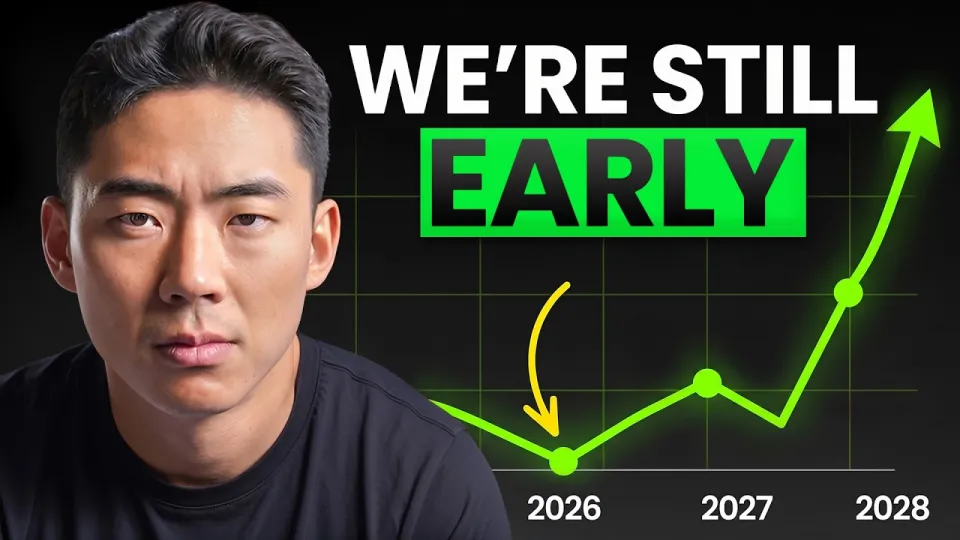
Video: my plan to make millions in crypto 2027
Need articles like this for your video? They help promote it on YouTube and Google — order them in the Telegram bot @sat_sit_bot. The bot writes and publishes the articles itself (with your YouTube video embedded) on popular topical websites (no ads). Your first 50 articles are free.
Key takeaways
- Brian Jung outlines his personal plan to make millions in crypto across the 2027 cycle, published on his YouTube channel on 2 October 2026.
- His thesis rests on three pillars: institutional inflows through ETFs, regulatory clarity, and real application narratives replacing pure speculation.
- The plan splits capital between a core Bitcoin and Ethereum allocation and a smaller basket of high-conviction altcoins such as SUI.
- Profit-taking is rule-based: scaling out at predetermined multiples, not waiting for a single cycle top.
- A recurring viewer concern is that identical bullish calls in 2025 ended in heavy losses for retail buyers who entered late.
A crypto plan for the 2027 cycle comes down to three decisions: what share of the portfolio sits in Bitcoin and Ethereum, which altcoin narratives deserve capital, and which rules force you to sell before the top. Brian Jung's breakdown, published on his channel on 2 October 2026, lays out exactly that framework, and his paid research product sits behind the Kaizen Pro waitlist.
Why the bull case for crypto still holds
Jung's bullishness is not a vibe; it is built on three structural changes that did not exist in earlier cycles. First, spot Bitcoin ETFs turned a niche asset into something allocators can buy inside a standard brokerage account, which keeps a steady bid under the market. Second, regulatory clarity in the US moved from threat to tailwind: once the rules of the game are written, large institutions can hold, custody and lend against crypto without legal risk. Third, the technology layer finally has users — stablecoin payments, tokenized treasuries, on-chain lending — rather than only speculative trading volume.
A useful sanity check on that argument comes from the audience itself. One of the most-liked comments under the video notes that the same bullish case was made in 2025 and the commenter lost everything. Both things can be true: the long-term thesis can be correct while the entry timing destroys a leveraged buyer. The lesson is not to dismiss the bull case but to separate the asset from the position size and the entry price.
The narratives driving the next cycle
Jung spends the largest block of the video on narratives, because in crypto the money usually rotates by story before it rotates by fundamentals. The themes he keeps returning to:
- Institutional infrastructure. ETFs, custody, tokenized real-world assets and regulated stablecoins. This is the slow, large-cap layer where Bitcoin and Ethereum capture most of the flows.
- High-throughput smart-contract chains. SUI gets an explicit mention, and viewers picked up on it — one commenter thanked him for finally covering the token after a long gap. The bet here is that cheap, fast execution attracts consumer applications.
- Consumer and payments applications. Wallets, on-chain trading venues and stablecoin rails that ordinary users touch without knowing they are using a blockchain.
- The Bitcoin layer. Scaling solutions and yield products built on top of BTC as it becomes a reserve asset inside portfolios.
The practical takeaway is that a narrative is only investable when capital is actually flowing into it — measurable through TVL, fee revenue, ETF inflows and developer activity — not when it merely sounds plausible on a podcast.
How to structure a portfolio for a million-dollar target
A plan to make millions is really a plan about allocation and exit. Jung's approach is a barbell: a core position in Bitcoin and Ethereum that he does not trade around, plus a satellite basket of altcoins small enough that a single failure does not break the portfolio. In practice that means most of the capital sits in the two assets with the deepest liquidity and the clearest institutional demand, while the speculative sleeve is sized so that a 90% drawdown is survivable.
Three rules make the structure work:
- Size by conviction, not by excitement. A position you cannot hold through a 50% drawdown is too large, whatever the upside case.
- Keep dry powder. Cash is a position; it lets you buy capitulation instead of watching it.
- Define the exit before entry. Decide the price or multiple at which you sell a third, then another third, and write it down.
One viewer put their own version bluntly: 50% into altcoins. That is a legitimate choice for someone with a high risk tolerance and a long horizon, but it should be a deliberate number, not a default.
Profit-taking rules that survive a cycle top
Every cycle produces the same regret: paper gains that were never realized. Jung's answer is mechanical scaling out rather than trying to catch the exact top. Set target multiples per asset at the time you buy, sell a fixed fraction at each target, and let the remainder run with a trailing stop. The discipline matters more than the levels, because the emotional pull at the top is to hold for more and the pull in a drawdown is to sell at the worst moment.
A second rule is to convert some crypto profit into stablecoins or fiat at each milestone. A portfolio that only ever grows in coin terms can lose 70% of its dollar value in weeks. Realized profit is the only kind that pays for anything.
Common doubts from viewers, addressed
"You're always bullish." Fair criticism, and the reason the video spends so much time on allocation rather than price targets. A permanently bullish stance is only useful if it comes with rules for when to be less exposed.
"When is the cycle top?" Some viewers argue the top will not arrive until 2029. Nobody knows, which is precisely why scaling out beats timing. If the top is later than expected, partial sells still leave you in the market; if it comes early, you have already banked something.
"Isn't regulatory clarity bad for crypto?" One popular comment argues that banks controlling crypto is worse than rejection. It is a real trade-off: institutional adoption brings liquidity and legitimacy but also centralization pressure on the parts of the market that were built to avoid intermediaries.
"I lost money following calls like this in 2025." The fix is not a better call but a better process: smaller size, no leverage on altcoins, staged entries and written exit rules.
All links from the video
- Kaizen Pro waitlist: https://whop.com/kaizen/products/kaizen-pro/
- Free crypto market report newsletter: https://newsletter.kaizen.gg/subscribe
- Brian Jung on X: https://twitter.com/thebrianjung
- Brian Jung on Instagram: https://www.instagram.com/creditbrian
- Risks and disclaimers document: https://docs.google.com/document/d/1WIgz8SB1mMzke0uvLt_6zXmSbqLL4gL5VgpDnVEk5m8/edit?usp=sharing
Bottom line
Brian Jung's 2027 plan is less a price prediction than a capital-allocation manual: heavy core exposure to Bitcoin and Ethereum, a deliberately small altcoin sleeve built around measurable narratives, and mechanical profit-taking that does not depend on calling the top. The video is educational content, not financial advice, and its own disclaimer stresses that crypto is highly speculative and that you should never invest more than you can afford to lose. The most valuable part is the discipline — sizing, staging and selling — because that is what separates a cycle that compounds from one that round-trips. If you want his ongoing research, the Kaizen Pro waitlist is where the channel points viewers next.
Source: my plan to make millions in crypto 2027 · Markdown version
Questions & answers
What is Brian Jung's crypto plan for the 2027 cycle?
It is a barbell allocation: a core position in Bitcoin and Ethereum that is held through volatility, plus a smaller basket of altcoins tied to measurable narratives such as institutional infrastructure and high-throughput chains like SUI. Exits are pre-planned, with partial sells at set multiples rather than a single attempt to time the top.
Why is he still bullish on crypto after a weak 2025?
He points to spot Bitcoin ETFs creating steady institutional demand, clearer US regulation that lets large firms hold and custody crypto, and real usage in stablecoin payments and tokenized assets. The thesis is structural rather than price-based, which is why the plan focuses on position sizing instead of targets.
How much should go into altcoins?
There is no universal number, but the framework sizes the altcoin sleeve so a near-total loss would not break the portfolio, with the majority in Bitcoin and Ethereum. Some viewers choose an aggressive 50% altcoin split; that only makes sense with a long horizon, no leverage and tolerance for deep drawdowns.
When will this crypto cycle top?
Nobody knows, and estimates range from an early peak to a top as late as 2029. The plan avoids the question by scaling out in tranches at predetermined multiples and converting some profit into stablecoins, so the outcome does not depend on catching the exact top.